
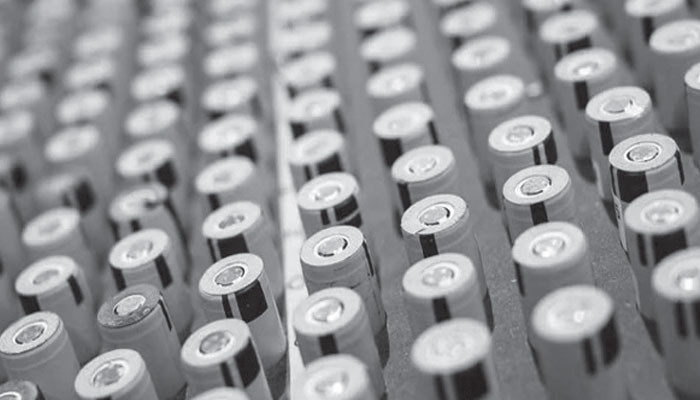

In an era of rapid technological innovation, Chinese scientists have developed a novel electrolyte component designed to overcome a long-standing limitation in lithium-ion batteries—potentially doubling the driving range of electric vehicles (EVs).
Standard lithium-ion batteries commonly used in EVs rely on chemical reactions between lithium salts and oxygen atoms within a liquid electrolyte to generate electricity. However, these conventional batteries require a significant volume of liquid solution, making size reduction difficult. Furthermore, traditional liquid electrolytes perform poorly at sub-zero temperatures and max out at an energy density near 350 Wh/kg.
According to the researchers, the new battery design utilizes a fluorinated hydrocarbon solvent capable of dissolving lithium salts far more effectively. This innovation enables an energy density exceeding 700 Wh/kg at room temperature, while maintaining nearly 400 Wh/kg even at extreme temperatures as low as -50 °C.
Key Performance Comparison
| Attribute | Conventional Lithium Batteries | New Fluorinated Hydrocarbon Battery |
| Primary Limitation | Large electrolyte volume required; poor low-temp performance | Solved via efficient fluorinated solvent dissolution |
| Room Temperature Energy Density | $\approx 350 \text{ Wh/kg}$ | $> 700 \text{ Wh/kg}$ (Doubled capacity) |
| Extreme Cold Performance (-50 °C) | Severely degraded | $\approx 400 \text{ Wh/kg}$ |





Leave a Reply