

by: Ashiq Faraz
In Sheikh Ayaz’s poetry collection Neel Kanth Aur Neem Ke Patte (The Blue Jay and the Neem Leaves), a verse from his poem Qarz-e-Mansoor reads:
In Sheikh Ayaz’s poetry collection Neel Kanth Aur Neem Ke Patte (The Blue Jay and the Neem Leaves), a verse from his poem Qarz-e-Mansoor reads:
We used to speak whatever came to our hearts,We never feared the gallows.The pillars of tyranny would quake perpetually…Our heart was like a sesame seed…A day shall surely comeWhen, hearing the heavy footsteps of the future,They will suddenly fall away from us at the place of execution,And we shall raise a dance of joy,Instantly redeeming the heavy debt of Mansoor.
In the blurb of Sheikh Ayaz’s book, Al-Majeed Riaz eloquently writes that the Neel Kanth (Blue Jay) is a colorful bird that has swallowed a drop of poison, which has left a blue streak across its throat; yet, it continues to sing atop the Neem tree. Riaz compares Sheikh Ayaz to this Neel Kanth—perched on the Neem tree, serving as a resonant protest against injustice. Ayaz’s poetry reflects a hundred shades: deep sorrow, blazing flames, joyous laughter, and the tender blossoms of love and affection.
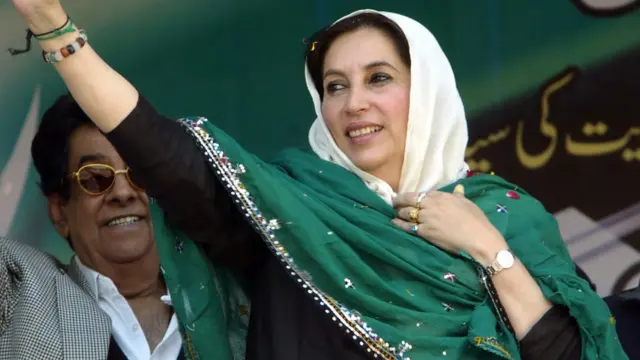
This symbolism, however, is not confined to Sheikh Ayaz alone. Zulfikar Ali Bhutto and Benazir Bhutto were also Neel Kanths of this land. Beneath the daunting shadows of a night-bound dawn, they absorbed the pain of the oppressed and the trauma of tyranny, ultimately succumbing to the gallows and iron fetters while keeping the cry for truth alive.
These thoughts resurfaced in my mind because I have recently been reading a remarkable book: The Fragrance of Tears by Victoria Schofield, newly published in Urdu as Aansooun Ki Khushboo by Oxford University Press Pakistan, translated by our dear friend Fakhar Abbas.
Before discussing the translator, a few words are due on Victoria Schofield—a distinguished British researcher, historian, author, journalist, and a leading expert on the history of Kashmir. Her works on the Kashmir conflict, including Kashmir in Conflict and Kashmir in the Crossfire, have long been essential reading, demonstrating her deep analytical grip on the region, including the position of Gilgit-Baltistan. Schofield has also written extensively on the political history of Afghanistan, South Asia, and the UK. Her book Bhutto: Trial and Execution exposes the political conspiracies and judicial overreach within Pakistan’s corridors of power.
Turning to the Urdu translator, Syed Fakhar Abbas: our acquaintance began when he was posted to Skardu as Assistant Director at Radio Pakistan. A man of literary sensibilities, he quickly befriended the poets of Baltistan. Tall, dark-complexioned, with a cigarette perpetually between his fingers and a ready, booming laugh, Fakhar hails from Jhang—the land along the riverbank immortalized by Waris Shah’s epic Heer Ranjha. Before Skardu, Fakhar served as a producer at Radio Gilgit. In his travelogue Between the Two Burrs in the Map, renowned travel writer Salman Rashid recalled meeting Fakhar Abbas, describing him as an erudite producer with a vast reading habit and exceptional broadcasting skill.
Fakhar Abbas possesses deep command over philosophy, history, English and Urdu literature, politics, and socialism. Associated with left-wing politics since his college days, he endured political hardship and holds a firm perspective on democracy. In Skardu, his circle included figures like B.P. Awan, Muhammad Abbas Kaleem, Mohsin, Ghulam Hussain Lodhi, Syed Abbas Kazmi, Muhammad Hasnain Hasrat, and Muhammad Qasim Naseem. His ideological affinity remained aligned with the federation of Pakistan and the political leadership of Gilgit-Baltistan, without allowing official constraints to hinder his expression. A devotee of Ghalib, Meer, Sauda, and Faiz, as well as international literature, his blending of Urdu and English literary traditions gives his work a distinct refinement.
Schofield studied at Oxford University, where her deep friendship with Benazir Bhutto began. In 1976, Benazir was elected President of the Oxford Union—a rare distinction for a student from South Asia—and Schofield succeeded her in 1977. The Fragrance of Tears traces this journey, starting from their youth at Oxford and culminating in the poignant scene at the Governor House in Lahore, where Schofield stood barefoot, laying flowers at Benazir’s memorial. With Schofield’s authorization, Fakhar Abbas rendered the memoir into Urdu. Translation requires not just bilingual fluency, but a high literary sensibility—qualities Fakhar possesses in abundance. His translation reads less like a rendering and more like an original literary work, flowing naturally without losing emotional resonance.
Schofield’s book is more than a personal memoir of a friendship; it chronicles a critical, blood-stained chapter of Pakistan’s political history. It contrasts the lighthearted, carefree days of Oxford and union campaigns with the dark clouds that gathered over Pakistan in 1977. It tells the tragedy of a leader’s daughter fighting for justice for her imprisoned father, bearing witness to Bhutto’s trial and judicial murder. Schofield documents Benazir’s historic rise as a young Prime Minister navigating political and religious conservatism, advocating for a progressive Pakistan on the world stage, and researching the Kashmir conflict at Benazir’s encouragement. Ultimately, The Fragrance of Tears stands as an eyewitness record of the struggles, sacrifices, and democratic aspirations that have shaped Pakistan’s history.




Leave a Reply